University of Richmond Athletics
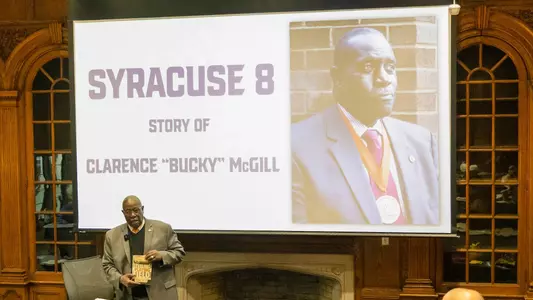
The Syracuse 8: The Story of Clarence “Bucky” McGill Comes to Richmond
02/27/2026 | General, Spider Performance
In celebration of Black History Month, Richmond Athletics welcomed Clarence “Bucky” McGill to campus to share his story of igniting change for his African American teammates and future athletes at Syracuse University.
McGill spoke to a group of football student-athletes, coaches, and staff in Millhiser, delivering an intimate presentation about his experience and the nine African American Syracuse University football players who boycotted the 1970 season due to the discrimination they faced as members of the football program. The event was part of the Millhiser Dialogue Series.
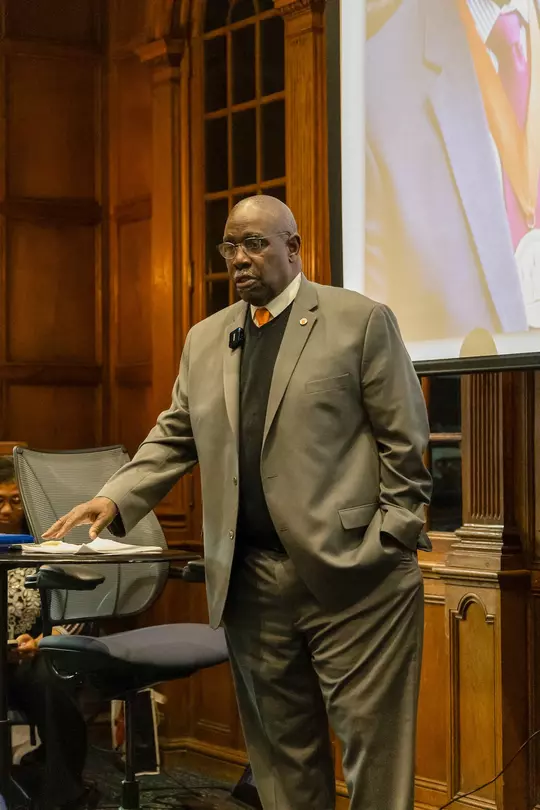
Growing up in Binghamton, New York, McGill was raised in a blended family and attended school with white students. He said he did not experience racism in his hometown.
“I couldn’t relate. I never experienced that (racism) in my hometown,” McGill said of his upbringing.
But when McGill arrived at Syracuse, he said the first thing his defensive ends coach told him was, “Don’t go out with any white girls.” In addition to being told who he could and could not date, McGill said he and his teammates were unable to enroll in certain classes, were not provided proper medical treatment by the team doctor, and were restricted from playing certain positions on the field due to the color of their skin.
After that realization, the group decided to take matters into their own hands. Risking their scholarships, their enrollment at Syracuse, and, for some, potential NFL careers, the men initiated change through their boycott.
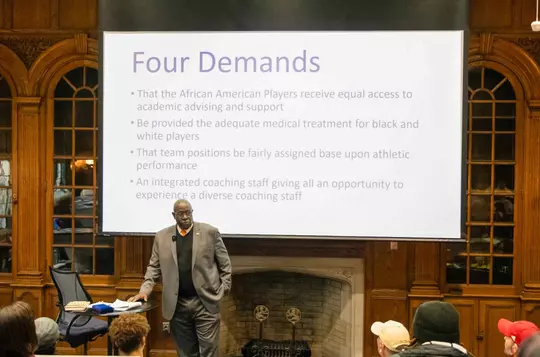
The group made four demands: that African American players receive equal access to academic advising and support; that Black and white players be provided adequate medical treatment; that team positions be assigned fairly based on athletic performance; and that the coaching staff be integrated to provide all players the opportunity to experience a diverse staff. While the change was not immediate, Syracuse reversed course over time, resulting in more equitable treatment of black and white players and the program’s first Black coaches.
In the early 2000s, Syracuse University formally apologized to the Syracuse 8. In 2006, then-Chancellor Nancy Cantor awarded the men the Chancellor’s Medal of Extraordinary Courage, the university’s highest honor.
At the end of the presentation, several attendees, including student-athletes, asked McGill questions. One student-athlete asked, “How do you think this impacted the rest of your life?”
“I have no regrets,” McGill said. “It did impact my life in the sense I didn’t play professional football, and I was pretty much set on playing professional football. One thing that was very important was that we kept our scholarships, focused on school, focused on getting out and focused on graduating. And that was a blessing.”
The book “Leveling the Playing Field: The Story of the Syracuse 8,” written by David Marc, with a foreword by Jim Brown, details the story of the nine players. The book provides a first-person perspective of the boycott and the trials and tribulations of athletics at Syracuse and in upstate New York.

“To be able to hear first-hand experiences of the sacrifices McGill and his teammates made to see change was impactful and showed me it is not always easy to do the right thing,” said Zachary Chambers, a senior linebacker on the Richmond football team.
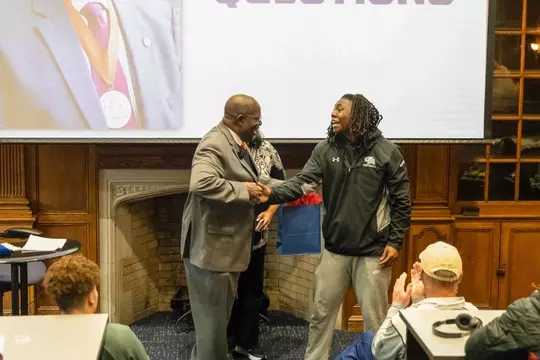
Defensive ends coach and former NFL and Virginia Tech alumnus Chris Ellis said, “Best part of 2026 so far. Mr. McGill’s speech about his role and tribulations during his time at Syracuse University were genuine and heartfelt. You can feel he is someone who believes in leaving everything better than he found it. Mr. McGill’s openness is exactly what was needed to break down these barriers for future generations.”
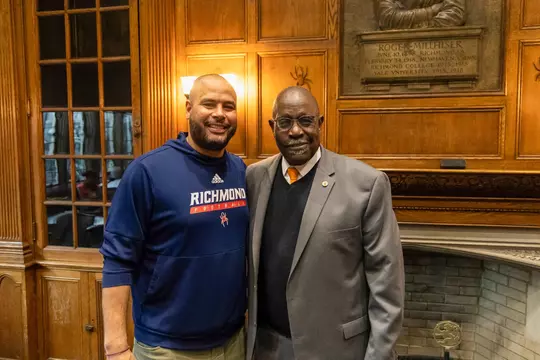
For the Richmond Athletics community, from student-athletes to coaches and support staff, McGill’s story provided a powerful example of courage and sacrifice in the pursuit of fairness.